








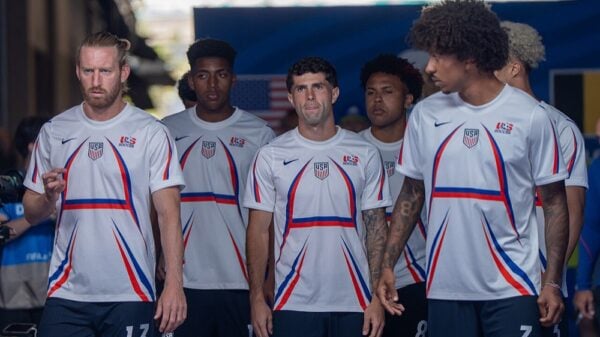
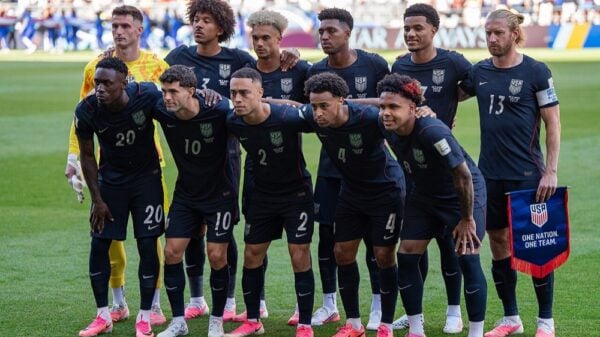







The road to continental glory is taking a significant detour for the United States men’s national team. As the program looks to reclaim the Concacaf Gold Cup title for the first time since 2021, they must navigate a radically redesigned tournament structure for the 2027 edition. Scheduled to take place from June 17 through July 11, the competition is moving away from its traditional layout to introduce a more rigorous group stage designed to heighten the stakes for every participating nation.
Under the updated guidelines, the field remains at 16 teams, but the familiar four-group system has been scrapped. Instead, the tournament will feature two massive groups of eight teams each. The qualifying field will consist of 15 teams emerging from the Gold Cup preliminary rounds, who will then be joined by Saudi Arabia, appearing as a guest participant. This shift adds an additional match to the opening round for every team, increasing the workload while offering more opportunities for high-profile clashes early in the schedule.
Concacaf officials believe this change will inject more unpredictability into the proceedings. By allowing four teams from each eight-team group to advance into the knockout stages, the margin for error remains slim, but the potential for “group stage chaos” increases. Victor Montagliani, the President of Concacaf and Vice President of FIFA, emphasized that the goal is to provide fans with elite matchups sooner in the bracket. He noted that the balanced mix of opponents and the sheer volume of high-stakes matches will elevate the competition’s quality from the opening whistle to the final match.
Innovative Group Stage Mechanics
The scheduling for this new eight-team group format utilizes a sophisticated ranking system to ensure fairness. Teams will be categorized into ranking “bands,” consisting of two teams each. A specialized fixture matrix is then employed to guarantee that every nation faces a balanced slate of high-ranked and lower-ranked opponents. This prevents a scenario where the region’s dominant powers are concentrated in a way that unfairly excludes emerging teams from advancing.
This “matrix” approach is designed to maintain competitive integrity while maximizing the commercial and sporting appeal of the group phase. By ensuring that every team plays four matches against a diverse array of skill levels, the tournament aims to eliminate “dead rubber” matches and keep the race for the top four knockout spots active until the final day of group play.
Consistency in the Knockout Rounds
While the group stage undergoes a total overhaul, the knockout phase will retain its classic structure once the field is narrowed to eight teams. The four advancing squads from Group A and Group B will be slotted into a fixed bracket. To reward group stage performance, the top-seeded teams from one group will be paired against the lower-seeded qualifiers from the opposing side.
There will be no reseeding as the tournament progresses. The winners of the quarterfinal matches will move directly into the semifinal pairings according to the pre-established bracket, setting a clear and transparent path to the trophy. This continuity ensures that while the journey through the groups is more complex, the final sprint to the championship remains a straightforward test of survival and skill.
Essential Schedule for the 2027 Tournament
- Official Tournament Draw: April 8
- Opening Matchday: June 17
- Quarterfinal Round: July 3 and 4
- Semifinal Round: July 7 and 8
- Gold Cup Final: July 11
Final Thoughts on the Gold Cup Evolution
The 2027 Concacaf Gold Cup represents a bold experiment in tournament design, prioritizing more matches and earlier marquee matchups. For the USMNT and their rivals, the new format demands deeper rosters and better tactical consistency over a longer period of play. By expanding the group stage and integrating a guest nation like Saudi Arabia, Concacaf is clearly aiming to boost the global profile of its premier event while testing the resilience of its member nations in a format that mirrors the intensity of larger international competitions.