











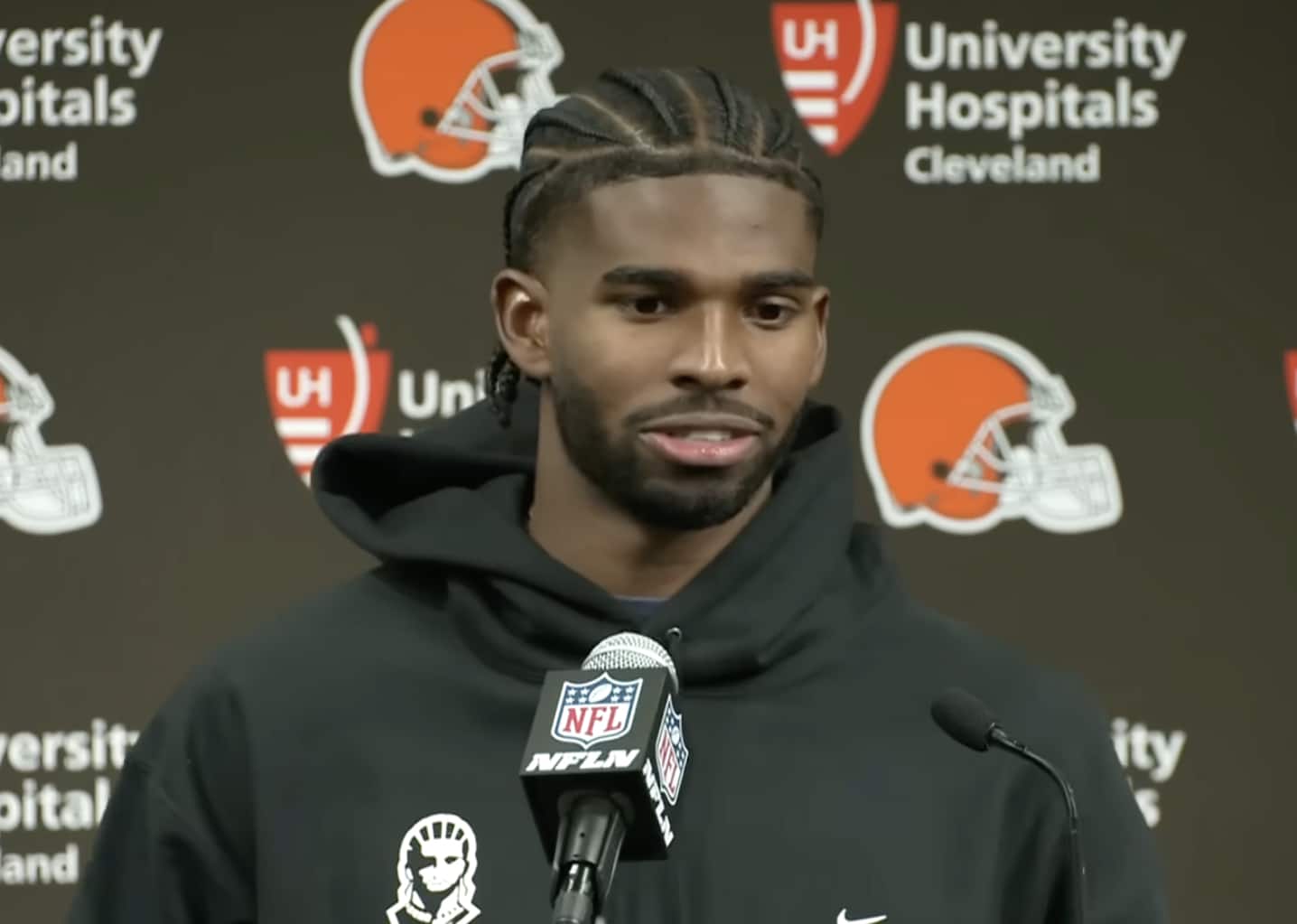
Shedeur Sanders’ entry into the NFL with the Cleveland Browns was nothing short of a commercial phenomenon. Despite being a rookie, Sanders leveraged a massive, dedicated following to generate an unprecedented windfall through trading cards, jersey sales, and various licensing deals. According to the NFL Players Association’s latest annual report, Sanders raked in a staggering $17.7 million in group licensing income during his debut season.
This figure doesn’t just represent a successful year; it marks a historic shift in player marketability. Sanders effectively doubled the previous single-season record of $9.5 million, formerly held by Tom Brady during his tenure with the Tampa Bay Buccaneers. To put this earning power into perspective, Sanders’ licensing revenue is 170% higher than the 2026 coaching salary for his father, Deion Sanders, at the University of Colorado. Furthermore, these off-field earnings dwarf his actual rookie contract, which is valued at approximately $4.6 million over four years.
The financial surge was fueled by a “ride-or-die” fanbase that transitioned with him from his collegiate days as a standout in the Big 12 with the Colorado Buffaloes. These royalty payments were directed to Sanders’ business entity, SS2 Legendary LLC, between May 2025 and February 2026. A significant portion of this total—$9.2 million—was paid out just days after the 2025 NFL Draft, highlighting the immediate demand for his brand. With Sanders recently switching his jersey from No. 12 to No. 2, analysts expect another surge in apparel sales as fans look to update their gear.
Shedeur Sanders’ Future Outlook and the Browns’ Quarterback Battle
While his bank account is thriving, Sanders’ journey on the gridiron has been more of a developmental challenge. Though his father described his transition to the professional ranks as “hellish” at times, the former fifth-round selection is currently entrenched in a high-stakes competition. Under the guidance of first-year Browns offensive coordinator Todd Monken, Sanders is vying for the starting role alongside veteran Deshaun Watson in what is being called a completely open competition.
Sanders’ rookie statistics reflect the typical growing pains of a first-year signal-caller behind a struggling offensive line. He completed 57% of his passes for 1,400 yards, throwing seven touchdowns against 10 interceptions. He also contributed 169 yards and a score on the ground, though he was hindered by 23 sacks and a passer rating that sat near the bottom of the league. Despite these figures, Sanders took over the starting duties for the final seven games of the season after Dillon Gabriel, another rookie, was sidelined by injury.
Coach Monken remains optimistic about the young quarterback’s ceiling, noting that the “elite playmaking ability” evident in his college tape is still very much present. Monken emphasized that every rookie has a steep learning curve but praised Sanders’ natural instincts. For his part, Sanders seems to have embraced the new regime in Cleveland, citing a refreshed energy and a coaching staff that pushes players both mentally and physically in the weight room and on the field.
Summary: Shedeur Sanders has redefined the financial potential of an NFL rookie, setting a new licensing record that surpasses even the greatest icons of the sport. While his commercial success is indisputable, the focus now shifts to his on-field development. As he enters a genuine quarterback competition in Cleveland, his ability to translate his “elite playmaking” into consistent NFL production will determine if his career as a starter can eventually match his status as a marketing powerhouse.